
Nikro Air Duct Cleaning in Yonkers: A Homeowner’s Guide
Nikro air duct cleaning equipment in Yonkers typically involves truck-mounted or portable negative air machines paired with HEPA vacuum extraction, but the brand name on the machine doesn’t guarantee proper technique. We’ve seen the same Nikro unit produce hospital-grade source removal in one home and barely move surface dust in another, depending entirely on operator training and setup discipline. If you’d rather not spend your Saturday inspecting CFM ratings on a stranger’s equipment, call us at (844) 257-5251 — Ryan Bell handles every job personally, and we’ll walk you through exactly what we’re running before we start.
What Nikro Equipment Actually Does (And What the Specs Mean)
Nikro Industries builds negative air machines and vacuum collection systems specifically for remediation and HVAC cleaning work. The core unit most residential contractors use is a high-CFM negative air machine — typically pulling 2,000 to 5,000 cubic feet per minute — paired with multi-stage HEPA filtration that captures particles down to 0.3 microns at 99.97% efficiency.
Here’s why those numbers matter for your Yonkers home:
- CFM (cubic feet per minute): This is the suction power that actually pulls dislodged debris out of your ductwork. Too low, and contaminants resettle before they reach the collection bag. In our experience, older Yonkers homes with long duct runs to second and third floors need serious airflow to overcome static pressure.
- HEPA stages: Nikro units use a pre-filter, secondary filter, and final HEPA stage. The pre-filter catches the big stuff — construction debris, rodent droppings, that toy car from 1987 — protecting the expensive HEPA element. A contractor who skips pre-filter checks is burning money and cutting your air quality.
- Source removal vs. surface cleaning: The Nikro system is designed for source removal, meaning it extracts contaminants from inside the duct rather than just pushing them around. This requires the negative air machine to create sufficient airflow while rotary brushes or air whips agitate the debris loose.
We run Rotobrush rotary systems alongside our Nikro HEPA extraction on most jobs in Yonkers — the brushes do the agitation, the Nikro does the collection. One without the other is like vacuuming a shag carpet without turning the beater bar on.
Setup Steps That Separate Pros from Pretenders
The Nikro machine doesn’t wheel itself in and magically work. A properly trained operator performs specific setup steps before any brushing begins, and these are the details you should watch for when a crew arrives at your Yonkers home:
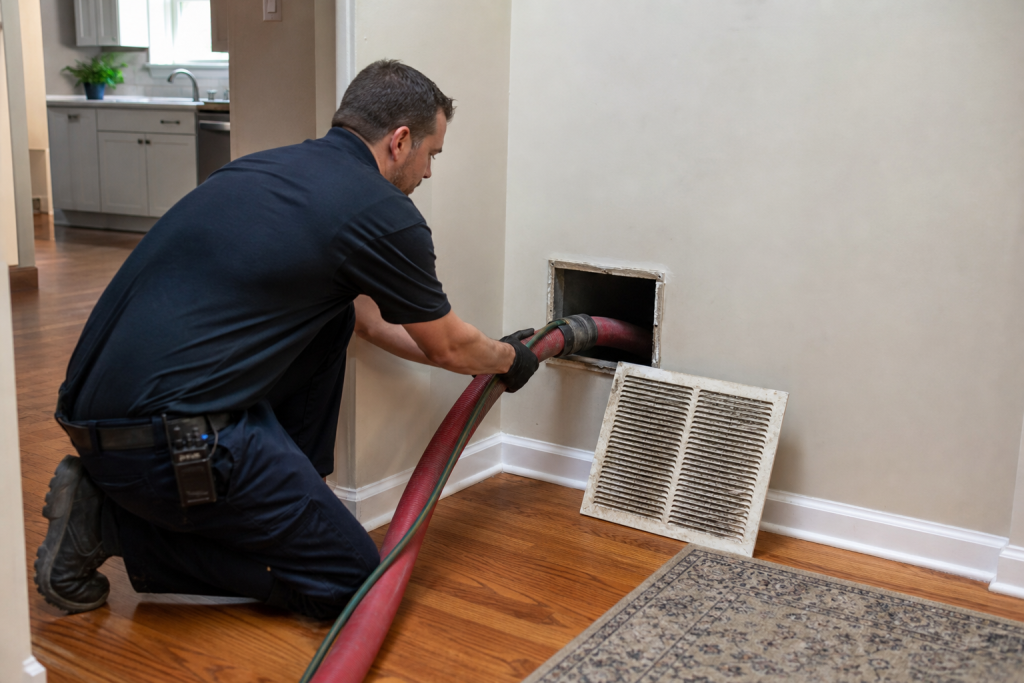
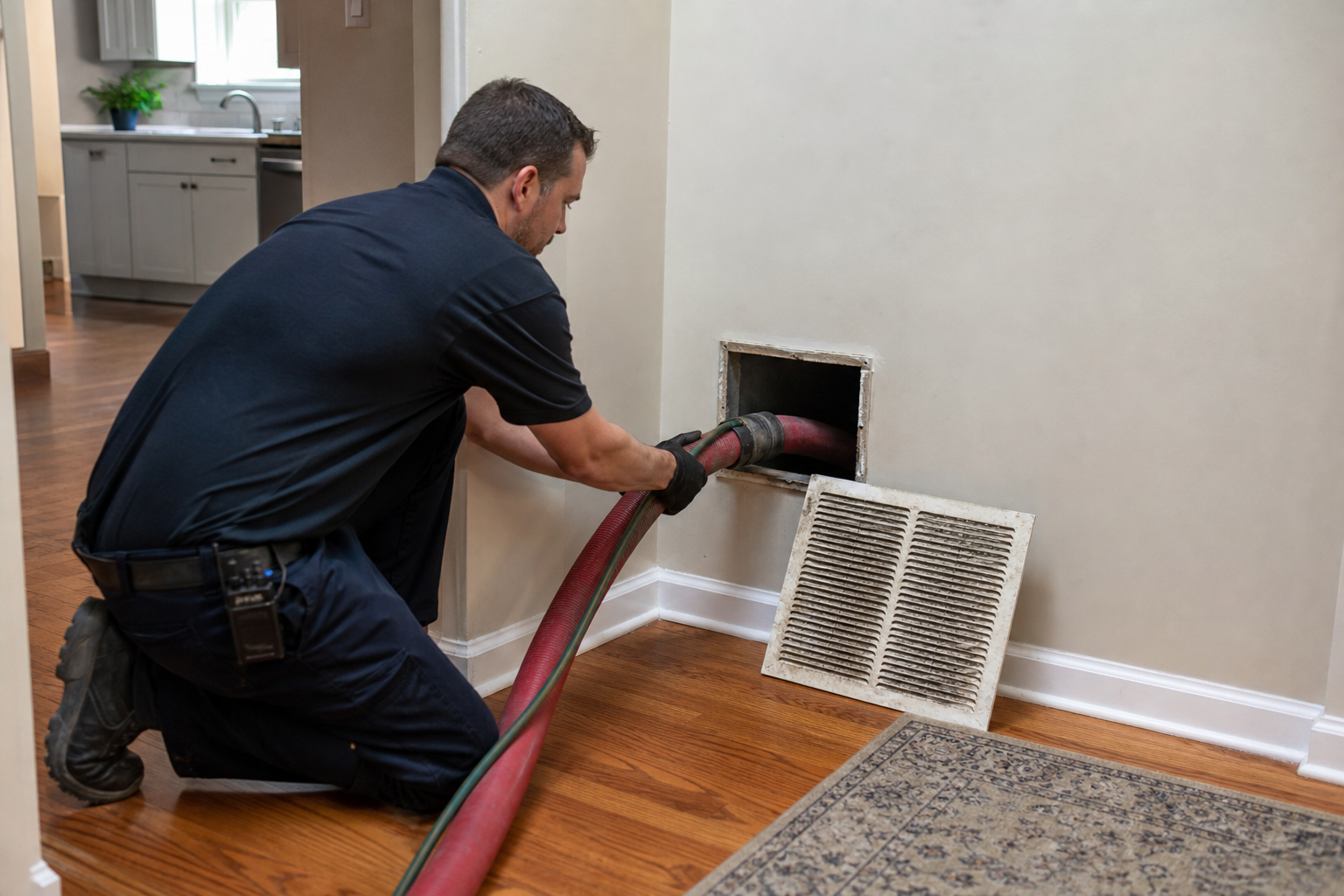
- Access point placement: We cut strategic access points into the ductwork — typically at the main trunk and near the air handler — to insert tools and attach the Nikro vacuum hose. Random holes or missing access panels are a red flag; every opening should serve a purpose and be properly sealed afterward.
- Pressure testing: Before starting, we verify the system can maintain negative pressure throughout the duct run. In split-level homes near Crestwood or Lawrence Park, we’ve found leaks at poorly sealed joints that would have let the Nikro pull attic air instead of duct air.
- Containment: The work area gets sealed with plastic sheeting, and the Nikro’s exhaust gets vented outside — never into your basement or utility closet. We learned this the hard way on a job in Bryn Mawr where a previous contractor had recirculated fine particulate through the house for hours.
If your contractor skips pressure testing or vents exhaust into the same room they’re cleaning, they’re not using the Nikro equipment correctly — no matter what they paid for it.
How Nikro Handles Yonkers’ Older Duct Systems
Yonkers has a housing stock that spans from pre-war brick apartment buildings near Getty Square to mid-century ranches in Lincoln Park to split-levels in Colonial Heights. The ductwork varies enormously, and the Nikro system adapts differently to each:
- Rigid steel ducts (common pre-1960): These can handle aggressive agitation, but the Nikro’s suction needs to overcome minimal leakage — old steel joints were often sealed with cloth tape or paste that degrades. We regularly find 40% leakage in unsealed steel systems, which means the Nikro is pulling air from wall cavities instead of the duct interior.
- Irregular trunk sizing: Many Yonkers homes have been renovated multiple times, with duct additions that create turbulence and dead zones. The Nikro’s variable CFM control lets us dial back suction on undersized branches so we don’t collapse flexible ductwork.
- Long runs to upper floors: Three-story homes in Park Hill or along the Hudson ridge have duct runs that test any system’s limits. We often pair the Nikro with auxiliary portable units on upper floors rather than fighting physics with one distant truck mount.
Last month we cleaned a 1920s colonial in Dunwoodie where the previous contractor had given up on the third-floor returns. The Nikro portable unit, positioned in the attic with a short hose run, pulled out what looked like a small pillow’s worth of compressed dust. The homeowner’s daughter had been sleeping up there with chronic congestion for two years.
Truck-Mounted vs. Portable Nikro Units: When Each Makes Sense
This distinction confuses a lot of Yonkers homeowners, and frankly some contractors exploit that confusion.
Truck-mounted Nikro systems pull from a gasoline-powered unit in the service vehicle, running a large-diameter hose to your home. They deliver the highest CFM and are ideal for:
- Single-family homes with accessible basements or crawl spaces
- Jobs requiring extended runtime without electrical constraints
- Heavy contamination where maximum airflow matters
Portable Nikro units run on 110V or 220V household power and stay inside your home. They’re the right choice when:
- Apartment buildings or condos prohibit running hoses through common areas
- The service vehicle can’t park within reasonable hose distance (common in dense Yonkers neighborhoods)
- Upper-floor access requires carrying equipment up stairs
- Supplemental suction is needed on remote duct branches
We own both configurations and decide based on your specific property, not what’s convenient for us. Any contractor who shows up with only one option and makes it work regardless is prioritizing their schedule over your results.
Where Nikro Fits in Our Actual Workflow (And What We Pair It With)
After eight years and 1,005 jobs, here’s my honest assessment: the Nikro HEPA vacuum is the best extraction platform I’ve used, but it’s not a complete cleaning system by itself.
Our standard Yonkers protocol runs like this:
- Inspection with video scope — We show you the before condition. No guessing, no “trust us.”
- Rotobrush rotary agitation — The brushes contact duct walls directly, dislodging adhered debris that air pressure alone won’t touch.
- Nikro negative air extraction — Simultaneous suction pulls dislodged material through the HEPA filtration and into sealed collection bags.
- Air whip or skipper line for stubborn deposits — Compressed air tools for areas the brush can’t reach effectively.
- Post-cleaning verification — Second video inspection, plus pressure and airflow measurements where we found issues.
For sanitizing, we use Abatement Technologies fogging equipment with EPA-registered solutions — applied only after mechanical cleaning is complete, because disinfectant on top of dust is just wet dust.
The Nikro excels at containment and extraction. Where it needs help is agitation and access. A contractor running Nikro suction without proper mechanical agitation is doing half a job with expensive equipment.
Red Flags: When “Nikro” on the Truck Doesn’t Mean Proper Cleaning
We’ve been called to fix enough botched jobs in Yonkers to recognize the patterns. Watch for these warning signs:
- No access panels created or used: If they’re just sticking a vacuum hose in a register, they’re not cleaning your ducts — they’re cleaning your register.
- Single-hour completion on a whole-house job: Proper setup, execution, and verification takes time. Our average 2,000-square-foot home runs 3-4 hours.
- Unable to explain CFM or filtration stages: If they can’t tell you their machine’s specs, they don’t understand their own equipment.
- No before/after documentation: We photograph and video every job. “Trust me, it looks great” is not documentation.
- Price seems disconnected from scope: $99 whole-house specials don’t cover proper Nikro operation, disposal, and verification. The math doesn’t work.
One homeowner in Nepperhan called us after a “$89 duct cleaning” left visible debris blowing from vents. The contractor had run a shop vac for 45 minutes and called it done. The Nikro unit on their truck was real; the technique was not.
Key Takeaways
- Nikro manufactures professional-grade negative air and HEPA vacuum equipment, but the operator’s skill determines your actual results.
- Proper setup — access points, pressure testing, containment — is non-negotiable and should be visible to you.
- Yonkers’ varied housing stock demands adaptable equipment configurations, not one-size-fits-all approaches.
- Truck-mounted and portable Nikro units each have appropriate applications; the right contractor owns both and chooses based on your home.
- Nikro extraction works best paired with mechanical agitation (Rotobrush) and post-cleaning verification.
The Bottom Line
Nikro equipment is legitimate professional-grade gear — we use it daily — but the brand name on the machine guarantees nothing about the person running it. In Yonkers, where duct systems range from century-old steel to modern flexible installations, you need a technician who understands both the equipment and your specific home’s challenges.
At Redwood Air Duct Cleaning Service Yonkers, Ryan Bell is the owner and the technician on every job. We’ve built our reputation across 1,005 reviews and eight years by showing homeowners exactly what we’re doing and why — including walking you through the Nikro setup before we start. If you suspect your ducts need attention and want an owner-operator who’ll explain the equipment rather than hide behind it, call (844) 257-5251 for a free estimate.
We also handle Air Duct Cleaning in Bronxville, Dryer Vent Cleaning in Bronxville, and HVAC Cleaning in Bronxville for Westchester County property owners who need the same direct accountability.
Frequently Asked Questions
Most whole-house Nikro air duct cleaning in Yonkers runs between $400 and $800, depending on system size, accessibility, and contamination level. Homes with multiple HVAC zones, finished basements limiting access, or severe buildup requiring extended agitation time fall toward the higher end. Call (844) 257-5251 for an exact quote — our estimates are free and specific to your home’s layout.
Ask to see the unit’s spec plate for CFM rating and HEPA certification, watch for proper access panel creation and containment setup, and request before/after documentation. A legitimate operator will explain their process without defensiveness. If they rush past setup or can’t identify their filtration stages, the brand name on the machine is irrelevant.
Yes, when operated by a technician who adjusts suction for your specific duct material and condition. We regularly clean pre-war steel and early flexible ductwork in Yonkers properties by matching the Nikro’s CFM to what the system can handle, supplemented with portable units for remote branches. The danger comes from untrained operators using maximum suction on fragile ducts, not from the equipment itself.
The NADCA recommendation is every 3 to 5 years for typical residential systems, but Yonkers homes near major roadways, with pets, or with occupants who have allergies may benefit from more frequent service. We assess during our initial inspection and don’t push unnecessary cleaning — our 4.9-star average across 1,005 reviews depends on honest recommendations, not repeat sales pressure. Call (844) 257-5251 to schedule an evaluation.
Written by Ryan Bell, Owner & Lead Technician at Redwood Air Duct Cleaning Service Yonkers, serving Yonkers since 2018.
Need Air Duct Cleaning Help?
Call Redwood Air Duct Cleaning Service Yonkers — licensed & insured, here with fast after-hours help in Yonkers.
(844) 257-5251