
Rotobrush Air Duct Cleaning in Yonkers: A Homeowner’s Guide
Rotobrush air duct cleaning in Yonkers typically costs $300–$600 for a residential system and works best on flexible ductwork and smaller homes where a rotary brush can make direct contact with all interior surfaces. It’s not the right tool for every duct type, especially the large metal trunk lines common in pre-war Yonkers homes, where truck-mounted negative pressure systems achieve better debris removal. If you’d rather have a technician evaluate which method your home actually needs, call us at (844) 257-5251 for a free estimate.
Here’s the thing about Rotobrush: their marketing is so effective that some Yonkers homeowners specifically request it by name, like asking for a Kleenex instead of a tissue. That’s not a knock on the equipment — it’s genuinely useful in the right application. But we’ve been called to homes in Getty Square and Crestwood where a previous “Rotobrush cleaning” left behind significant buildup in the main trunk line because the tool was never designed to reach that far or handle that duct geometry. Understanding what this equipment actually does, and where it falls short, keeps you from paying for the wrong solution.
How Rotobrush Actually Works (The Mechanics)
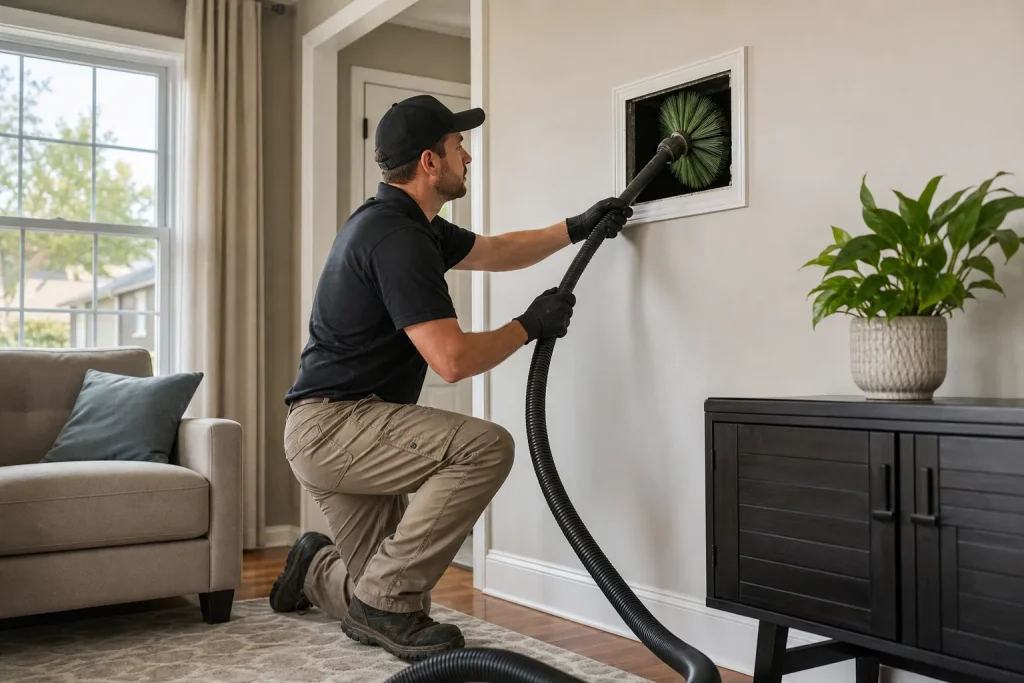
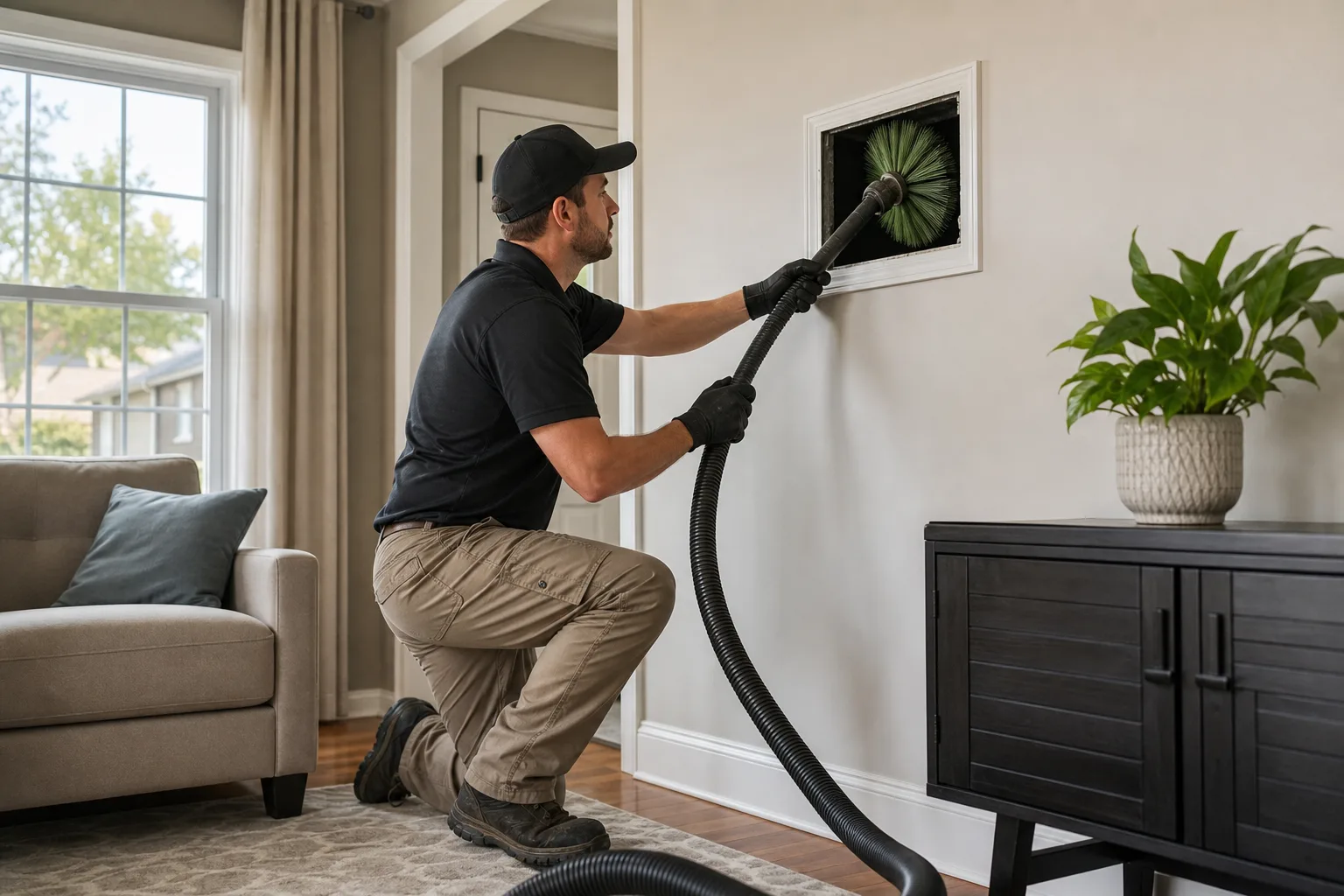
Rotobrush systems use a simple but effective contact-cleaning method: a rotating brush head scrubs the interior duct walls while a vacuum nozzle positioned behind the brush captures dislodged debris. The brush spins at roughly 450–900 RPM depending on the model, and the vacuum typically pulls 500–700 CFM through a flexible hose.
Here’s what that means in practice:
- What it agitates: Dust, pollen, pet dander, and light debris adhering to duct walls — anything the bristles can physically touch
- What it captures: Particles dislodged in that immediate contact zone, pulled back through the vacuum hose
- What it can miss: Debris in long straight runs beyond the hose’s reach, buildup in corners and seams where brush contact is limited, and heavy particulate settled in the bottom of large trunk lines
In Yonkers, we see this limitation most often in the Lawrence Park and Cedar Knolls areas, where homes built in the 1920s–1950s have rigid metal ductwork with generous dimensions — often 8×12 inch or larger trunk lines. A Rotobrush head sized for standard 6-inch round duct simply can’t cover that surface area effectively. The brush flails in the center, maybe tickles the corners, and the vacuum’s CFM isn’t sufficient to pull debris from deep in the system back to the access point.
We’ve opened up ducts in Lincoln Park that were “cleaned” six months prior by a contact-only method. The main trunk still had a half-inch layer of compacted dust. The branches were spotless. That’s the Rotobrush story in a nutshell: excellent where it can reach, invisible where it can’t.
Where Rotobrush Excels vs. Where It Falls Short
The equipment choice should match your duct type, not your contractor’s inventory. Here’s how we break it down based on what we’ve encountered across Yonkers:
Rotobrush performs well on:
- Flexible ductwork (common in additions and finished basements)
- Smaller residential systems with multiple access points
- Light maintenance cleaning where heavy buildup isn’t present
- Homes with abundant 90-degree turns where a rotary head can maintain wall contact
Truck-mounted negative pressure outperforms on:
- Large metal trunk lines in older Yonkers homes
- Systems with significant debris accumulation (years between cleanings)
- Long straight runs where contact methods can’t reach the far end
- Commercial-style ductwork in multi-family conversions
Our Nikro HEPA vacuum extraction system pulls 2,000+ CFM — roughly three to four times the capture rate of portable Rotobrush units. That matters when we’re working in a Dunwoodie colonial with a 40-foot straight trunk line. The negative pressure reaches every corner of the system simultaneously, while the rotary brush would need dozens of access cuts to achieve comparable coverage.
That said, we do use Rotobrush equipment — selectively. For the flexible branch lines in a Sprain Lake ranch addition, it’s the right tool. The key is matching method to application, not defaulting to whatever’s in the van.
Why the Technician Matters More Than the Brand Name
Equipment is only as good as the person operating it. We’ve seen immaculate jobs done with basic tools and disasters left behind by expensive rigs in careless hands.
The NADCA (National Air Duct Cleaners Association) standard is “source removal” — meaning debris must be physically removed from the system, not just loosened or redistributed. Whether a contractor achieves that with Rotobrush, Nikro, or a combination depends on their training and honesty about limitations.
When Ryan Bell evaluates a Yonkers home, he’s checking:
- Duct material and gauge (flexible vs. rigid metal vs. fiberboard)
- Trunk line dimensions and straight-run lengths
- Access point availability and spacing
- Debris type and compaction level
- Whether the homeowner’s primary concern is allergens, efficiency, or post-renovation cleanup
That last point matters. Post-renovation jobs in Bryn Mawr or Scarsdale-adjacent Yonkers properties often need aggressive debris removal that contact cleaning alone won’t achieve. Construction particulate is heavier and more abrasive than household dust. We’ve found it packed into seams and settled in low points that only high-volume extraction clears effectively.
Our 4.9-star average across 1,005 reviews isn’t from having the fanciest equipment — it’s from diagnosing correctly and using the right combination of tools for each specific system. Sometimes that’s Rotobrush for branches and Nikro negative pressure for the trunk. Sometimes it’s all negative pressure. The homeowner doesn’t need to know the difference; they need a technician who does.
Questions to Ask Any Rotobrush Contractor in Yonkers
If a company shows up with Rotobrush equipment, these questions separate knowledgeable operators from brand-name dropouts:
“What’s your vacuum’s CFM capture rate, and is it HEPA-filtered?”
Portable units vary enormously. True HEPA filtration (99.97% at 0.3 microns) prevents redistribution of fine particulate back into your home. We’ve tested contractor equipment in Yonkers that was essentially a shop vac with a fancy label.
“What brush diameter are you using for my duct size?”
Brush-to-wall contact is everything. A 6-inch brush in an 8-inch duct cleans nothing but air. Proper sizing requires measuring duct dimensions at access points, not guessing.
“How do you handle the main trunk line?”
If the answer is “we run the brush as far as we can,” that’s insufficient for most Yonkers homes built before 1970. Ask specifically about trunk-line methodology.
“Do you achieve NADCA-standard source removal, and how do you verify it?”
Visual inspection with borescope cameras before and after is the minimum standard we apply. Any contractor resistant to showing you internal duct footage is telling you something.
We’ve had homeowners in Runnymede tell us previous cleaners finished in 45 minutes for a whole house. That’s barely enough time to set up proper containment and run diagnostic checks, let alone achieve source removal. Speed is a red flag, not a selling point.
What We’ve Found Opening Up “Already Cleaned” Ducts
This is where our 8 years of hands-on work gets specific. We’ve lost count of the ducts we’ve opened that were supposedly cleaned within the past year.
In a Park Hill three-story home last spring, we accessed a main trunk line after a competitor’s Rotobrush service. The bottom of the horizontal trunk had undisturbed sediment nearly three-quarters of an inch deep — compacted dust, skin cells, and what looked like decades of cooking grease particulate. The branch lines were fine. The trunk was untouched.
Conversely, we serviced a Homefield condo where a diligent operator had used Rotobrush properly on appropriately sized flexible ductwork. The system was genuinely clean, and our borescope confirmed minimal remaining debris. The difference wasn’t the equipment — it was matching tool to application and having the honesty to acknowledge when a system needed more than contact cleaning could provide.
Our honest verdict from the field: Rotobrush is a capable tool in narrow circumstances. For Yonkers’ housing stock — heavy on pre-war construction, multi-family conversions, and older metal ductwork — it’s rarely sufficient as a standalone method. The homes that benefit most are newer construction with flexible ductwork and abundant access points, which describes a minority of our service area.
When Ryan Bell arrives with our Rotobrush, Nikro, and Abatement Technologies equipment, he’s prepared to use whatever combination achieves actual source removal — not just what was advertised in the coupon.
When to Call a Pro
If you’re experiencing persistent dust accumulation shortly after cleaning, uneven airflow between rooms, or musty odors that return within weeks, your previous cleaning likely redistributed debris rather than removing it. Visible dust puffing from vents when the system kicks on is another clear indicator.
We also recommend professional evaluation if your Yonkers home has never had ductwork inspected and:
- It’s more than 25 years old
- You’ve completed renovations without duct isolation
- Family members have allergy or asthma symptoms that worsen seasonally
- Your energy bills have climbed without explanation
Redwood Air Duct Cleaning Service Yonkers handles the full picture — Redwood Air Duct Cleaning Service Yonkers home — from initial cleaning through Air Duct Cleaning in Bronxville, Dryer Vent Cleaning in Bronxville, and HVAC Cleaning in Bronxville for properties near the border. We also repair and seal ductwork, which often reveals itself as the real problem once cleaning removes the debris hiding gaps and separations.
The Bottom Line
Rotobrush air duct cleaning is a legitimate tool with legitimate limitations. In Yonkers, where housing stock skews older and ductwork tends toward larger metal configurations, it’s rarely the complete solution homeowners assume from brand recognition alone. The critical factors are technician assessment, proper equipment matching, and verified source removal — not the logo on the van.
Key takeaways:
- Rotobrush excels at flexible duct and smaller systems with good access; it struggles with large trunk lines and long straight runs
- Vacuum CFM and HEPA filtration matter more than brush brand
- NADCA-standard source removal requires verification, not assumption
- Yonkers’ older homes often need hybrid or negative-pressure methods
- Equipment is secondary to technician honesty and diagnostic skill
If you’re in Yonkers and unsure whether your ductwork was properly cleaned — or whether it needs cleaning at all — Redwood Air Duct Cleaning Service Yonkers offers free estimates with no pressure to book. Ryan Bell will evaluate your specific system and explain exactly what method makes sense for your duct type. Call (844) 257-5251 to schedule.
Frequently Asked Questions
For most Yonkers homes built before 1970, Rotobrush alone is usually insufficient because the large metal trunk lines common in older construction exceed the tool’s effective reach. We typically combine rotary brush contact cleaning for branch lines with high-CFM negative pressure extraction for main trunks. Call (844) 257-5251 and we’ll assess your specific duct configuration at no charge.
Rotobrush-specific services in Yonkers generally run $300–$600 for residential systems, though we price by system complexity and debris level rather than equipment type. A simple flexible-duct condo in Getty Square falls at the lower end; a multi-zone pre-war home in Crestwood with metal trunk lines requires more labor and equipment. We provide upfront pricing before any work begins — call (844) 257-5251 for an exact quote; estimates are free.
Request before-and-after borescope footage showing internal duct surfaces at multiple points, especially the main trunk line. Persistent dust on vents within weeks, uneven room temperatures, or odors returning quickly are all signs of incomplete removal. We’ve re-cleaned dozens of Yonkers systems where “cleaning” merely redistributed debris. If you suspect a previous job fell short, we offer inspection-only visits with camera documentation.
We typically schedule within 24–48 hours for standard appointments and offer same-day service for urgent situations like post-renovation dust or respiratory concerns. Emergency availability depends on current job volume in your Yonkers neighborhood. Call (844) 257-5251 — we’ll give you an honest timeframe and do our best to accommodate.
Written by Ryan Bell, Owner & Lead Technician at Redwood Air Duct Cleaning Service Yonkers, serving Yonkers since 2018.
Need Air Duct Cleaning Help?
Call Redwood Air Duct Cleaning Service Yonkers — licensed & insured, here with fast after-hours help in Yonkers.
(844) 257-5251